

BLOG
Loyalty in the workplace
Is workplace loyalty fact or fiction? According to Lizelle Jacobs of MindAlive, it is largely a myth. “Managers are often under the impression that they are doing
everything right to build loyalty, but in reality, I often see the opposite. People are not loyal, and there are two main reasons for this. The first is the organisation’s culture, which may not support how the human brain functions. The second is leaders who lack the self- awareness and emotional intelligence needed to manage people effectively.”
Jacobs, a business and life coach with 25 years’ experience in the agricultural environment, focusses on leadership development and emotional intelligence. She explains that most employees are driven firstly by fear (of losing their jobs) and secondly by financial rewards such as salaries, bonuses, and promotions. This ‘carrot-and-stick’ approach is, however,
not sustainable.
In today’s rapidly changing world, the skills required in the workplace are also evolving. “With artificial intelligence (AI) replacing many technical skills,” she notes, “the emphasis must be on human skills, which is something we have been losing. It’s about learning how to be a good human being. We cannot expect people to perform like AI systems, because humans simply aren’t wired that way.”
Understanding loyalty
The question, then, is how to cultivate genuine loyalty? Jacobs explains that the first step is to understand what loyalty means. Loyalty involves being faithful and steadfast in your support or commitment to a person, organisation, cause, or beliefs. This is especially relevant when under pressure or when it comes at a personal cost, such as regularly working overtime or on weekends.
Jacobs further explains that the human brain is far more complex than that of most animals. It includes the cerebral cortex or the ‘thinking brain’, which is responsible for higher-level functions such as perception, cognition, language, movement, and conscious thought.
“This thinking brain plays a vital role in loyalty. People decide whether to be loyal based largely on how others make them feel. If those feelings are negative, they may withdraw their loyalty from the individual or the organisation that person represents.” At its basic level, the brain is designed for survival. It constantly scans the environment and the people within it, categorising them as either charming or alarming.
Each person has five key triggers that activate their internal alarm system, prompting either engagement or withdrawal from a situation:
• Status: Do I feel valued and respected?
Do I matter?
• Certainty: Is there predictability
and clarity?
• Autonomy: Am I trusted to work independently without being micromanaged?
• Relatedness: Do I feel a sense of
belonging and trust within the group?
• Fairness: Am I being treated justly?
The triangle dilemma
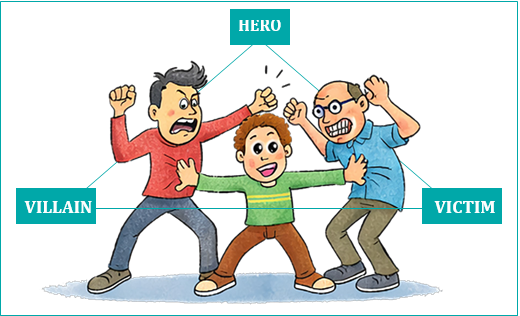
Jacobs illustrates human behaviour using a triangle model. The negative version, known as the drama triangle (Figure 1), consists of three roles: the hero, victim, and villain.
These roles interact in ways that can erode workplace loyalty. Individuals may assume different roles and sometimes move between them very quickly. The cycle often begins with the victim. The victim avoids responsibility, blames others, and hides mistakes. They see themselves as powerless, believing circumstances simply happen to them. For example, if passed over for promotion, they may become cynical and speak negatively about the organisation.
Interestingly, people are often pushed into the victim role. They may start out as a team player, motivated, engaged, and with big dreams, but over time their enthusiasm and engagement decline, often due to the influence of workplace heroes and villains.
The villain is easier to identify. This person displays controlling or toxic behaviour, creates unnecessary rules, and reacts poorly when things don’t go his or her
way. Yet the real problem is often the hero. This is usually a well-meaning leader who tries to solve everyone’s problems. While this may seem helpful, it discourages others from thinking independently and fosters dependency; the hero basically does their work for them while the victim is absolved from taking responsibility.
Jacobs emphasises that this is not effective leadership. “By not empowering people to do their own work, they cannot grow or develop essential skills.”
This pattern is especially common in the grain industry, where experienced and capable individuals from different generations rise through the ranks
by learning the hard way. When such individuals fail to share knowledge, they become the sole problem-solvers simply because they have not empowered others. This leads to long hours, late nights and weekend work, often at the expense of people’s personal lives. Over time, this leads to resentment, which pushes them into the victim role.
From drama to loyalty
The drama triangle is not static; the roles can change as circumstances change. Individuals move between roles, yet everyone remains trapped within the triangle. The fed-up hero may turn into the victim, and the victim can easily become the villain.
Getting out of this triangle requires a change, especially from managers. Letting go of the ‘hero’ mindset is essential. When managers fail to empower others or withhold knowledge, they inadvertently create harm in the workplace. A manager’s true role is to transfer knowledge, develop skills, and act as a mentor. Through this approach, the drama triangle can be transformed into a loyalty triangle (Figure 2).
Within the loyalty triangle, individuals understand their roles as team members. They recognise that they have choices, but that they are also responsible for the consequences of those choices.
The most important shift in this model is not from a managerial mindset to a leadership mindset, but towards a coaching mindset. Coaches are not driven by titles, authority, or power. Instead, they focus on using their experience and skills to empower others. Their value lies not just in knowledge, which is widely accessible in the age of AI, but in their lived experience and the wisdom that comes with it.
“In the loyalty triangle, the different roles evolve significantly. The villain becomes a challenger, or a high-performance coach, to borrow a rugby analogy. This coach sets high expectations, but the team understands and embraces these demands as part of their growth and development. The goal is not to break people down, but to build them up.
“With this new dynamic in the workplace, stronger loyalty emerges, and the limiting roles of hero, villain, and victim begin to disappear.”
Meaning: Work has meaning and purpose in the larger context of the organisation. Autonomy and appreciation: People have the freedom to influence how they work and make decisions.
Growth (through challenge): Ongoing challenges promote personal and professional development.
Impact: Individuals can see real, positive results from their efforts. Impact is closely associated with connection.
Challenge: No growth can take place without challenges.
When MAGIC happens
A strong culture of loyalty and integrity emerges when the principles of MAGIC (Figure 3) are applied.
By Izak Hofmeyr, Plaas Media
0 COMMENTS
LEAVE A COMMENT