

BLOG
Grain industry braces for turbulent season
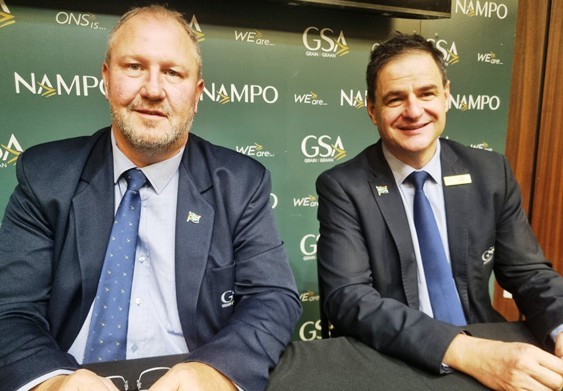
Grain producers are facing turbulent times and must carefully consider how to use inputs more efficiently in order to produce more with less. This was the core message from Richard Krige, chairperson of Grain SA, on the first day of the organisation’s annual congress held in March at Nampo Park near Bothaville in the Free State. The theme of this
year’s congress was “Opening the gap – sustainability key; profitability foremost”.
Krige warned that global events, particularly the conflict in the Middle East, will likely have a major impact on the agricultural sector. The industry is entering a difficult market cycle characterised by high stock levels and low grain prices, while input costs are projected to continue rising due to geopolitical tensions.
Emphasising that there is no quick solution, he urged producers to arm themselves with accurate information and robust strategies. “As a collective, we can get through this. My message to producers is to think long and hard about your inputs, production practices, and strategies.”
Price-cost squeeze tightens
Corné Louw, Grain SA’s head of applied economics and member services, noted that global grain stocks remained high, exerting downward pressure on prices. Consequently, South African producers are facing an exceptionally challenging economic cycle. Louw explained that in recent seasons, the domestic grain price structure shifted from import parity to export parity pricing, a change that has lowered the ceiling for local grain prices.
Almost all grain prices declined over the past year. He drew attention to a big profitability gap using market data available at the time of the congress:
• Maize: Producer prices dropped by
22%, while total input costs rose by approximately 19%.
• Soya beans: Grain prices fell by 23%, despite input costs surging by as much as 45% in some regions.
• Sunflower: While grain prices held up slightly better (remaining largely flat), input costs continue to rise, tightening margins.
“If you calculate a production budget anywhere in the country, none of the budgets are in the green. We simply cannot produce profitably at current grain prices. Once total production costs are taken into account, it seems everyone is paying in. The gap between input costs and grain prices is widening by the day,” warned Louw.
Supplier behaviour concerns
Krige highlighted that diesel accounts for approximately 18% of producers’ input costs, with fertiliser representing an even bigger share, depending on the production system. He warned that market panic tends to create volatile conditions that some suppliers may exploit. “The question I keep asking is to what extent orders have already been placed?” Krige said. “While we see the rand showing some resilience, the rising price of Brent crude oil is directly inflating the costs of essential chemicals and fertiliser.”
He also challenged the transparency of existing global supplies and said it was unacceptable that producers preparing for the winter grain planting season were encountering “closed order books” at the time, due to uncertainty surrounding the conflict in the Middle East. “Suppliers know their traditional sales volumes. Every company has targets and growth plans. Did those plans simply disappear when panic set in?”
He said price fluctuations are distorting behaviour within the supply chain. To address these challenges, Grain SA has engaged the Fertiliser Association of South Africa (Fertasa) and plans further discussions with suppliers and industry stakeholders.
Fertiliser supply a major risk
Louw cautioned that the Middle East, notably the area around Iran, is a major global source of fertiliser. South Africa imports around 80% of its fertiliser requirements, making the country highly vulnerable to global disruptions. Nitrogen fertiliser and a portion of phosphate fertiliser production are highly energy intensive.
As crude oil prices rise, natural gas prices typically follow, which in turn drives up fertiliser production costs. “This is a clear red flag for South Africa,” he warned, adding that some opportunistic suppliers had already raised their prices (before the actual price hike announcements) despite still having stock available.
Grain SA intends to address this through industry engagement.
Krige thanked companies that chose a long-term approach rather than exploiting the crisis. Diesel, he said, is a major cost throughout the agricultural value chain and in food distribution. Price increases pass through the system quickly, while price decreases take far longer to filter through. “With government intervention and support, the state can mitigate some of these risks for consumers,” he said.
Kokkie Kooyman, executive director at Denker Capital, said while he does not expect the fuel situation to stabilise quickly, oil prices typically retreat towards previous levels once tensions ease, though not necessarily to their original lows.
Viability of the wheat industry Grain SA’s latest grain barometer, presented as a producer ‘reality check’ at the congress, painted a bleak picture as confidence dropped sharply since last year’s congress. Only 40% of the producers who attended reported being more profitable than the previous season. Confidence in the next season also stood at 40%, while only half of attending producers were confident in the industry’s long-term prospects. Less than a third (30%) felt comfortable investing in their farms at the time.
Especially wheat producers painted a concerning picture with the economic sustainability of wheat production in South Africa under significant pressure. During the winter grain working session on day two of the congress, working group chairperson Jose de Kock said the pressure is evident in declining auction and land prices. Several factors are beyond local control, with international price levels being the main driver. He said the decline in nationally planted wheat hectares is now an established trend. Alternative crops, especially maize and soya beans, offer better returns, leading many producers to move away from wheat.
In the Western Cape, however, viable alternatives are limited. Global production trends show that grain output averaged around 480 million tonnes over the past five years. Production rose by nearly 50 million tonnes in the past year alone. This surplus has pushed commodity prices lower. At the same time, input costs continue to rise. This combination puts producers under financial pressure and often makes wheat production unprofitable.
De Kock said South Africa is a net importer of wheat. National production is typically just over 1,8 million tonnes, depending on seasonal conditions.
Annual consumption ranges from three to
3,5 million tonnes. Imports are therefore essential as local production covers only about 56% of demand. As a result, local producers often receive lower prices than those of wheat imports. South Africa was once self-sufficient in wheat production, but this is no longer the case.
Is self-sufficiency possible?
In response to how the wheat sector can become self-sufficient again, De Kock pointed to the role of the Johannesburg Stock Exchange (JSE), specifically the impact of the high location differential. During the 2023/24 marketing year, the wheat location differential rose to about R800/t. This applies to trading on the
JSE Commodities Derivatives Market (formerly Safex) and is also used in the cash market for transport and delivery – a key concern.
De Kock said South Africa has not developed an efficient, balanced cash and hedging market. A functional cash market should compensate producers based on actual transport costs. In practice, the cash market follows the futures market, leading to price distortions.
Heleen Viljoen, Grain SA economist, explained during the session that the portion of the wheat price represented by the location differential in the Western Cape is four times higher than that of international competitors. In contrast, producers in the United States and Australia deliver grain at points with no location differential.
De Kock said the wheat tariff mechanism remains a critical factor affecting the industry, as tariff adjustments are not announced on time. Producers hope the Wheat Forum’s request to establish a Section 7 committee under the Marketing of Agricultural Products Act, 1996 (Act 47 of 1996) will be approved. The committee will examine the wheat value chain, focussing on contentious issues, including potential unfairness in the tariff mechanism.
The maize oversupply
Discussions in the maize working group focussed on improving input efficiency, managing costs more effectively, and stimulating market demand to absorb the surplus production. Some producers questioned whether reducing the number of hectares planted to maize might be a better approach.
The challenge, however, is to maintain sufficient production for market security without causing overproduction, which is at the root of the current problem. This oversupply, combined with low international prices, is placing significant pressure on the industry.
The maize working group session was led by chairperson Will Grobler (Sannieshof) along with Dr Dirk Strydom, managing director of Nampo, and Mlibo Qotoyi, operational manager of Grain SA’s Farmer Development Programme.
Dr Strydom indicated in his market overview that South Africa has carryover stocks of both white and yellow maize, with a major production season ahead, according to figures submitted to the National Crop Estimates Committee.
Due to limited export markets for white maize, surplus white maize is often sold in the yellow maize market for animal feed purposes, increasing yellow maize exports. He said the current situation suggests that South Africa will likely start the next season with large carryover stocks. The country has moved from import parity to export parity prices, but prices still need to adjust further to stimulate exports, which are progressing more slowly than expected, thus increasing pressure.
The working group stressed the need for market expansion, especially for white maize, with about one million tonnes of additional maize needed. Dr Strydom said fewer plantings could help restore the balance, but it remains a difficult decision because prices must compensate for
Producers used the opportunity to request that minister of agriculture, John Steenhuisen, consider ethanol plants that could increase local demand, help bring prices back into balance, and restore profitability. According to Steenhuisen, the biofuels framework has been under discussion for a long time, but progress
has been uneven. If structured correctly – fiscally responsible and market-aligned – biofuels could contribute to energy diversification, rural industrialisation,
and support for maize producers.
A 2022 World Wildlife Fund report indicates that South Africa could potentially produce 3,2 billion litres of sustainable aviation fuel annually under strict sustainability requirements.
Such a framework must be economically viable and should not create unintended distortions in the food system. Expanding domestic demand strengthens the resilience of the grain value chain, whether through agro-processing, animal feed, industrial use, or biofuels. Steenhuisen said Japan is showing growing interest in South African yellow maize due to
its consistently high quality. Japanese delegations visited South Africa last year to observe production systems first-hand. Another visit is planned for this year to further strengthen the relationship.
The working group also discussed the moisture percentage at which maize is delivered and the percentage at which producers should be compensated.
Christal-Lize Muller, Plaas Media
0 COMMENTS
LEAVE A COMMENT