

Articles & Insights
Reflecting on the Agbiz Student Case Study Competition
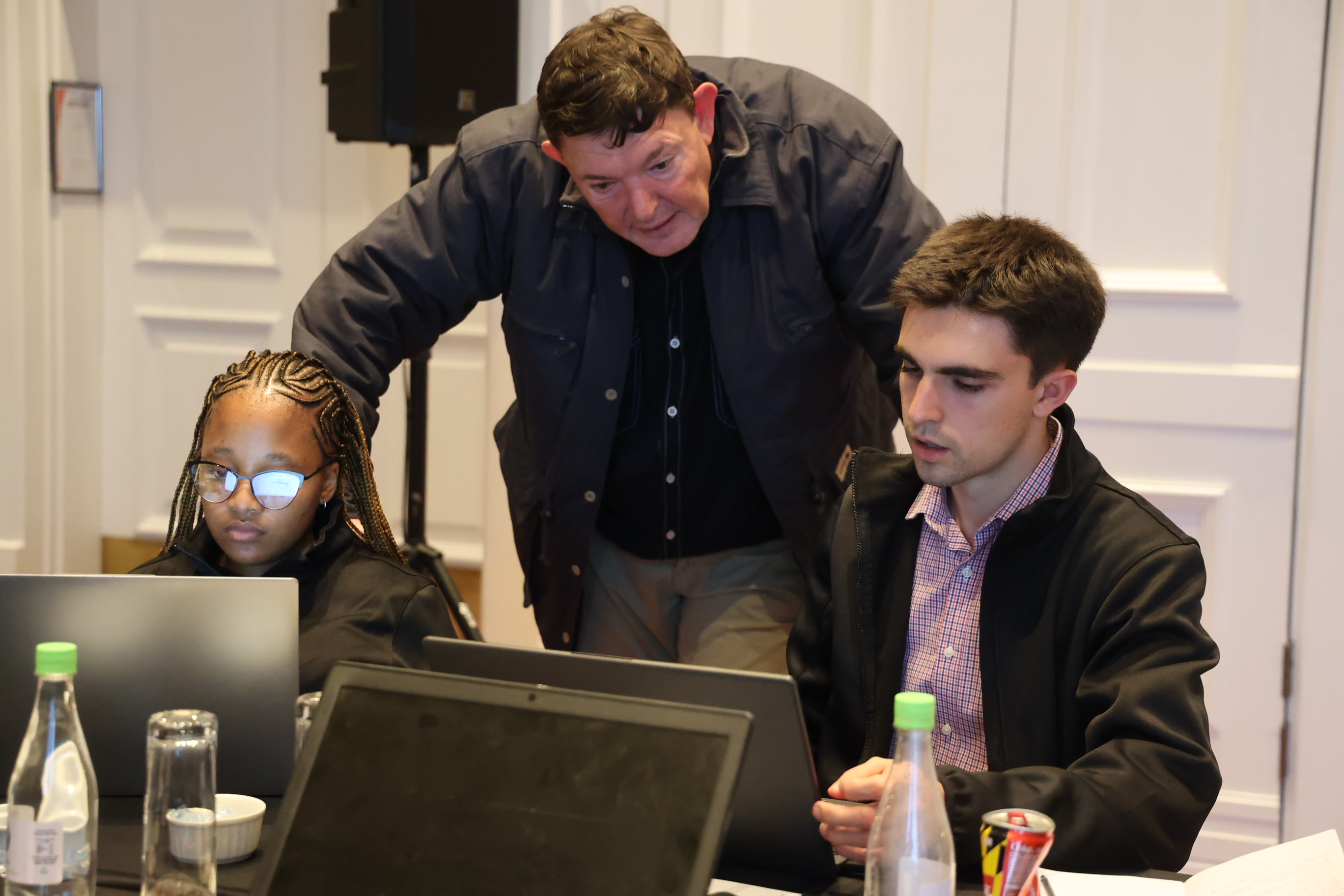
The first Agbiz Student Case Study Competition was held during the 2012 Agbiz Congress. Among the participants in that inaugural competition was the current Agbiz chief economist and presidential envoy on agriculture and land, Wandile Sihlobo, illustrating the long-term value of investing in the next generation of agricultural leaders.
Since its inception, the competition has reflected Agbiz’s commitment to developing future agricultural economists, policymakers and industry leaders by providing a platform where students can develop practical solutions to real-world issues, challenge conventional thinking, engage in evidence-based debate, and present their findings to delegates representing the agricultural industry.
This year’s competition, held in June during the Agbiz Congress, challenged students to address one of South Africa’s most pressing agricultural issues: the long- term sustainability and competitiveness of the country’s wheat industry. This topic is also the focus of a Section 7 Committee investigation by the National Agricultural Marketing Council (NAMC).
Participants and winners Students from six universities – the University of Pretoria, Stellenbosch University, North-West University, the University of Fort Hare, and the University of the Free State – participated under the expert guidance of Dr Melissa van der Merwe and Prof Johan van Rooyen of Stellenbosch University. They were tasked with analysing the structural challenges facing the wheat value chain and developing practical, evidence-based policy recommendations.
The presentations delivered by the four finalist groups demonstrated excellent research, a strong understanding of agricultural economics, and an appreciation of the delicate balance between producer sustainability, food security, and market efficiency.
Although each team approached the challenge from a different perspective, several common themes emerged, highlighting opportunities to strengthen South Africa’s wheat sector through improved policy design, market coordination, and pricing mechanisms.
Understanding the challenge South Africa is a net importer of wheat, with around half of domestic consumption supplied through imports. The area planted to wheat has declined drastically over the past three decades, from around 1,6 million ha during the 1990s to around 550 000ha in 2026.
As the cornerstone of domestic wheat production, the Western Cape accounts for around 73% of the national crop. Maintaining the viability of wheat farming in this region is therefore critical, not only for food security but also for rural employment, downstream industries, and the agricultural economy as a whole.
Students identified several factors contributing to this trend, including rising input costs, more unpredictable weather conditions, geopolitical developments, and pricing mechanisms that many producers believe no longer adequately reflect current market realities. The students also emphasised that maintaining a viable wheat industry is not merely about food security – it is also about preserving the economic vitality of wheat-producing regions.
Rethinking the wheat tariff system One of the most frequently discussed topics was South Africa’s variable wheat tariff system. Students explained that while the existing tariff mechanism was designed to protect local producers against periods of low international wheat prices, its effectiveness is often diminished by the time required for administrative approvals and implementation. Because tariffs are activated only after a series of procedural steps, a frequent delay between market movements and the application of tariff adjustments is common.
Several teams proposed an automatic tariff adjustment system modelled on South Africa’s monthly fuel price methodology. Under this approach, the existing tariff formula would remain unchanged, but adjustments would occur automatically according to predetermined rules and a transparent calculation process. The students argued that such a system could improve predictability and transparency while reducing implementation delays and maintaining current policy objectives. Another recommendation focussed on the reference price used in the tariff calculation. Students noted that the current reference price is based on calculations developed several years ago. They questioned whether periodic reviews could ensure that the mechanism continues to reflect prevailing international market conditions.
Better timing of wheat imports
Another recurring theme centred on the timing of wheat imports. The students acknowledged that imports remain essential to meeting domestic demand. However, they argued that the scheduling of import deliveries could be improved to reduce unnecessary pressure on local markets during the harvesting season.
Several presentations highlighted that imported wheat often arrives during the Western Cape harvest period (October to December). According to the students, this overlap increases market supply precisely when local producers are marketing their crop, placing downward pressure on prices. The proposed approach would seek to maintain reliable wheat supplies for millers and consumers while imports would complement, rather than directly compete with, locally harvested wheat.
Modernising wheat pricing The teams also gave considerable attention to South Africa’s wheat pricing system and the operation of the Johannesburg Stock Exchange (JSE) wheat contract. One area of discussion involved the current Randfontein reference point used to calculate location differentials. Students argued that because most Western Cape wheat never moves to Randfontein, some producers regard the existing system as disconnected from actual grain movement patterns. Several alternative approaches were presented.
One proposal recommended replacing the single reference point with a multi- reference point system that incorporates regional milling demand, transport costs, storage infrastructure, and actual grain flows. Students suggested that this could better reflect physical market realities and improve pricing fairness across production regions.
Another presentation explored the possibility of relocating the pricing reference point closer to the country’s primary wheat production and import areas. Various options were evaluated, including Cape Town Harbour and more centrally located inland alternatives. While acknowledging that any changes would require industry consultation and detailed economic analysis, students argued that updating the location differential methodology could improve pricing efficiency and better reflect today’s wheat supply chain.
Looking beyond benchmarks Students also questioned whether South Africa’s traditional reliance on Kansas wheat futures is the most appropriate international pricing benchmark. Given the changing origins of South Africa’s wheat imports, several teams suggested that future pricing frameworks could consider incorporating additional international reference markets that better reflect actual trade flows.
Rather than replacing existing systems outright, students proposed diversified pricing benchmarks to strengthen market relevance while preserving transparency and risk management functionality. Some teams suggested developing a broader national wheat supply and demand model that integrates domestic production, international markets, imports, and consumption patterns to support future policy decisions.
Collaboration: The common thread Perhaps the strongest message emerging from the competition was that no single intervention can address the challenges facing the wheat industry. Whether discussing tariffs, imports, pricing or logistics, every team recognised the importance of collaboration across the value chain.
Several groups proposed stronger coordination between producers, grain traders, millers, bakers, policymakers, and regulators to improve information sharing, planning, and market transparency. Such collaboration, they argued, would help ensure that policy decisions balance producer sustainability, consumer affordability, and national food security.
Policy interventions, the students emphasised, should be designed to balance multiple objectives simultaneously, ensuring producer profitability, affordable food for consumers, competitive milling industries, and South Africa’s long-term food security.
The value of fresh perspectives As South Africa continues to navigate global market uncertainty, climate variability and changing trade patterns, innovative thinking will become even more important. While not every proposal may ultimately be adopted, the competition illustrated the value of encouraging young professionals to engage with complex agricultural policy questions.
The students demonstrated an impressive ability to combine academic research with practical industry considerations, producing recommendations that stimulated thoughtful discussion among delegates attending the Agbiz Congress. The competition also confirms, based on the presentations, that the future of agricultural leadership and agricultural economics is in capable hands.
By Dr Charl van der Merwe